Claytonia palustris is a perennial herb that is native to California, and endemic (limited) to California.
California Rare Plant Rank: 4.3 (limited distribution).
[Wikipedia] Distribution, Description: Distribution
The wildflower is endemic to California where it is a rare species indigenous to wetlands including bogs, fens, meadows and streamside riparian thickets at low to mid elevations of the Klamath Mountains, Cascade Range, and Sierra Nevada as far south as the Kern and Tule River watersheds. [2] The species epithet palustris is Latin for "of the marsh" and indicates its common habitat. [3]
Description
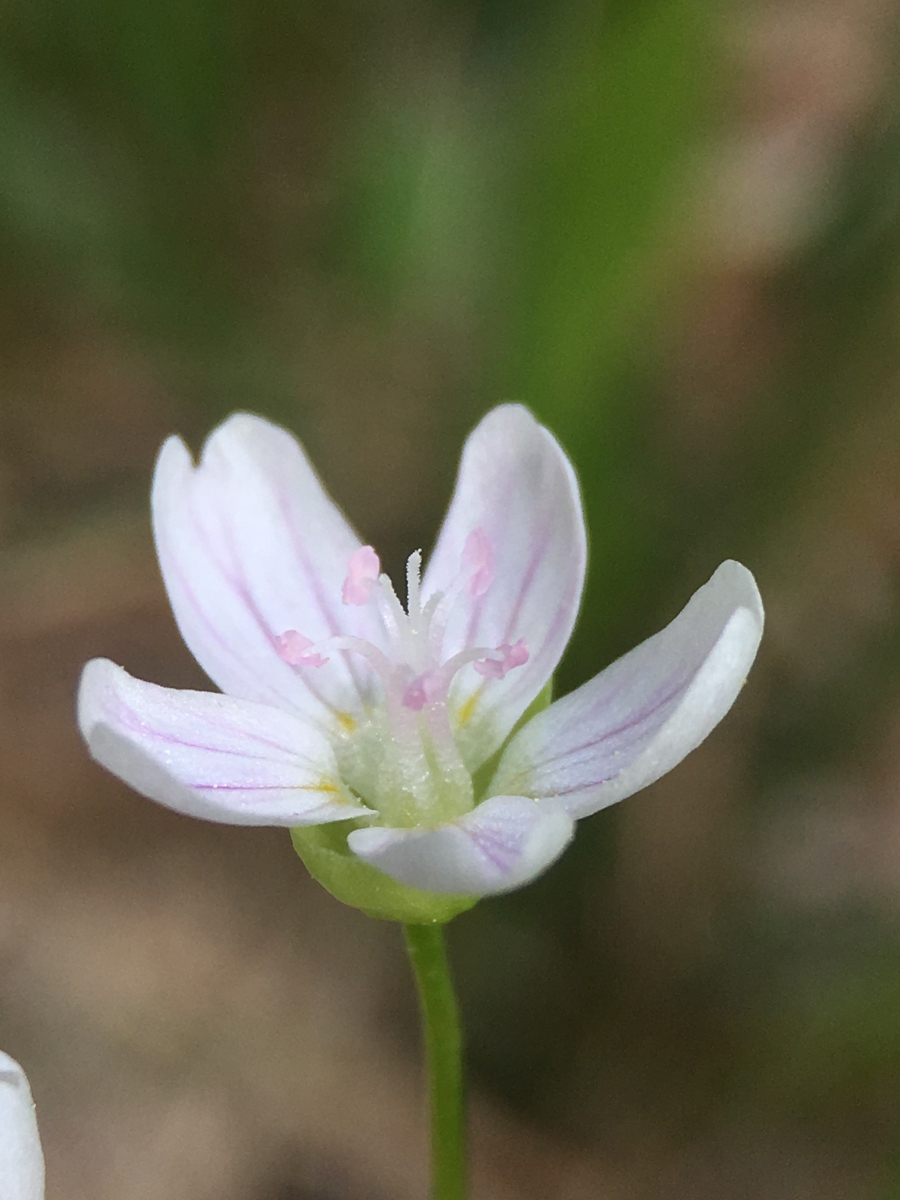
Claytonia palustris is a rhizomatous perennial herb producing a slender stem up to about 0.5 metres (1.6 ft) long. It has leaves with oval-shaped blades a few centimeters long at the ends of long, narrow petioles. The inflorescence bears up to 18 flowers on a long stalk. Each flower has 5 white or pink tinted white petals just under a centimeter long. The bloom period is May to October. (link added by Mary Ann Machi)
Calflora:
Information on California plants for education, research and conservation,
with data contributed by
public and private institutions and individuals.
[web application]. 2025.The Calflora Database
[a non-profit organization].Available:
https://www.calflora.org/(Accessed: 04/02/2025).




 one or more occurrences